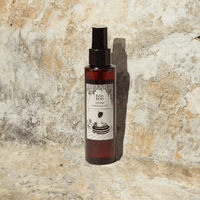
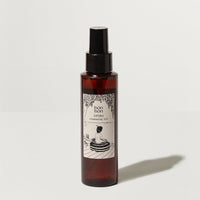
1) I’ve noticed that Ofuro Cleansing Oil stings my eyes. Why is that?
A. Ofuro is a cleansing oil of natural origin, including the surfactant used. Its lipid-based nature and the type of surfactant may cause a slight stinging sensation when it comes into contact with the eye’s mucous membrane, but this poses no risk to eye health. To use the product correctly, massage Ofuro Cleansing Oil onto your dry face with dry hands until the makeup dissolves, keeping your eyes tightly closed. Only then should you add water to rinse, being careful not to let the product—which becomes more liquid when mixed with water—run into your eyes, which should remain closed.
2) Does it make sense to use an oil-based makeup remover for oily skin?
A. Absolutely. First of all, harsh cleansing products containing strong surfactants and powerful “degreasing” agents are certainly not suitable for combination or oily skin. Conversely, an oil-based cleanser—free of strong surfactants and non-comedogenic (such as Ofuro Cleansing Oil)—is highly recommended for combination or oily skin. It works by affinity on sebaceous skin without having an excessively “degreasing” effect, thus maintaining the skin’s lipid balance. This way, the skin will not feel the need to produce excess sebum to rebalance itself. Furthermore, thoroughly massaging the oil-based cleanser onto a dry face can help reduce or manage the presence of sebaceous filaments and, over time, reduce the occurrence of blackheads.
3) Will my face feel oily after using Ofuro Cleansing Oil?
A. Ofuro is a water-soluble makeup remover: once it comes into contact with water, it will begin to dissolve and be completely removed without leaving any oily residue on the skin. For this same reason, it’s also important not to compromise its makeup-removing power by adding water too soon (Ofuro should be massaged onto a dry face, with dry hands, until all makeup is completely removed).